To reset chrome settings:
Steps:
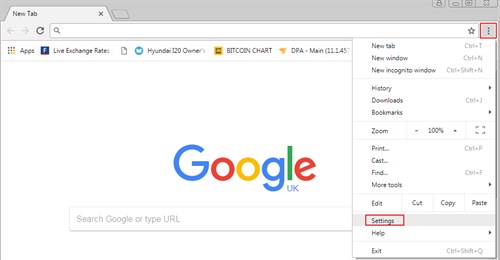
1. Chrome browser > click the More icon (with three lines or dots) in the upper-right corner > select Settings.
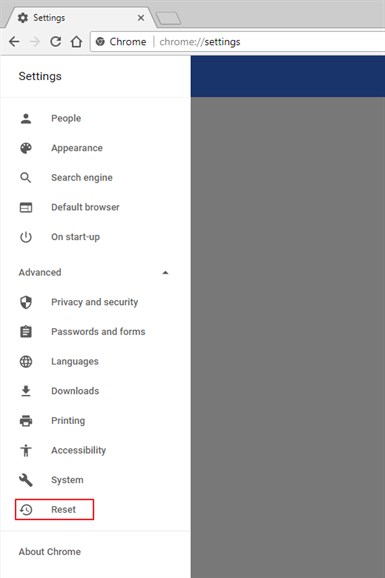
2. Click on the Show advanced settings... link.
3. Click on the Reset settings button.
If the More icon is missing, access settings using following link:
chrome://settings/
To see all chrome-urls, use link:
chrome://chrome-urls/
For more information on resetting chrome, see here.
Chrome: Disabling notifications for a website:
Steps:
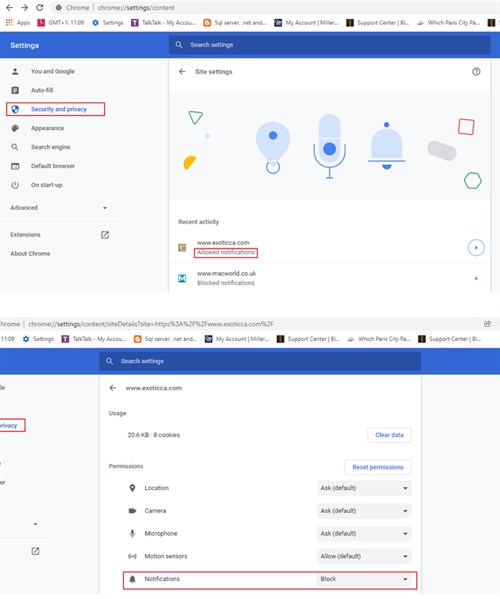
1. Chrome > open settings > Select Security and privacy > Site settings.
2. Open website > Under Permissions > Notifications, select Block from dropdown list.
Eg: disabling notifications:
To show Bookmark Bar:
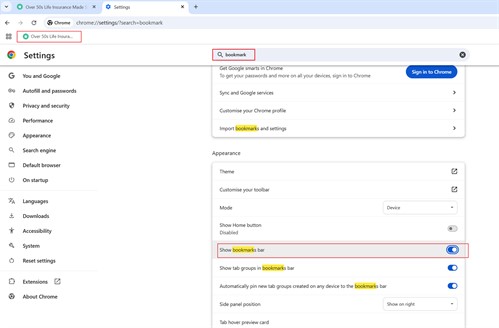
Toggle on 'Show bookmark bar' in chrome settings:
Eg:
Missing Chrome Google search bar:
If your Chrome Google search bar is missing, it's likely due to a change in settings or an extension interfering with the browser.
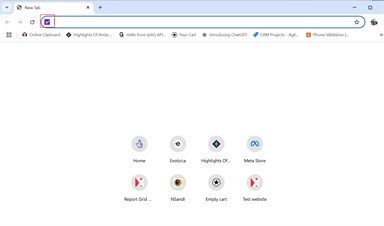
To fix this, you can check your search engine settings or disable extensions that might be causing the problem.
Here's a step-by-step guide to fixing a missing search bar in Chrome:
Check Search Engine Settings:
Steps:
1. Open Chrome and click the three dots (More) in the top right corner.
2. Select Settings.
3. Go to Search engine on the left side.
4. Ensure Search engine used in the address bar is set to Google.
If it's not set to Google, change it and see if the search bar reappears.
Chrome: To remove unwanted search engines:
If search engine on Chrome keeps reappearing, this can happen because:
a. a browser hijacker (very common)
b. an extension forcing a search engine
c. Chrome being managed by a policy (work/school or malware)
To remove unwanted search engines, but if they keep reappearing or resetting your default, you must remove the extension/policy/malware that is reinstalling them.
To Remove Search Engines and Stop Them Coming Back:
Steps:
1. Remove the search engines in Chrome:
a. Open chrome://settings/searchEngines
b. Under 'Site search' and 'Search engines', click the three dots next to the unwanted ones
c. Choose Remove
If Chrome won't let you remove it, skip to section 3, that means something is controlling Chrome.
2. Set your default search engine again:
a. Go to chrome://settings/search
b. Choose Google (or your preferred one)
c. Remove all others from the list
If it switches back later, this means something is hijacking it.
3. Check for extensions forcing the search engine:
This is the 1 cause.
a. Go to chrome://extensions
b. Disable anything you don't recognise
c. Remove anything that mentions:
- 'Search'
- 'Web'
- 'Shopping'
- 'Assistant'
- 'New Tab'
- 'Yahoo / Bing / SafeSearch / Search Manager'
Even one bad extension can reset your search engine every time you open Chrome.
4. Check if Chrome is 'Managed' (this blocks removal):
a. Type chrome://policy
b. If you see anything listed (especially DefaultSearchProvider…), Chrome is being controlled.
This can be:
- workplace/school policy
- or malware pretending to be a policy
5. Scan for browser hijackers:
If the search engine keeps changing to Yahoo/Bing or a random one, it is almost always a browser hijacker.
These are mild malware that change your search engine without permission.
Run:
- Windows Security (built-in)
- Malwarebytes (free)
This usually removes the policy/extension that keeps reinstalling the search engine.
6. Reset Chrome (if needed):
If nothing else works:
a. Go to chrome://settings/reset
b. Choose Restore settings to their original defaults
This removes:
- search engine overrides
- extensions
- policies (if not system-level)
For more information, see here.
